| From Potsdamer Platz, I could just barely see part of the Quadriga of Victory, the copper statue that majestically crowns the top of the Brandenburg Gate, the spiritual heart of Berlin where the wall fell in 1989. The statue, originally created in 1793 by Johann Gottfried Schadow, originally depicted the winged goddess of peace, Eirene, driving a chariot pulled by four horses. Napoleon took the statue in 1806, but in 1814, it was returned after the German victory over France. Eirene then became Victoria, the goddess of victory, with the addition of a Prussian eagle on an iron cross. Later, the gate became a symbol of the Third Reich when the Nazis took control of Germany. Finally, after Germany’s reunification, Victoria once again became Eirene. Just beyond the gate was the clear dome of the Reichstag building, the seat of government in Berlin and where Adolf Hitler and the Nazis seized power in 1932. Kaisers and kings, conquers such as Napoleon, and those defeated such as the Third Reich all passed through the Brandenburg Gate, entering in victorious glory or leaving in defeat, the proud city in ruins. |
| The Bicycle Man of Berlin (continued) |

Blocks and Floors
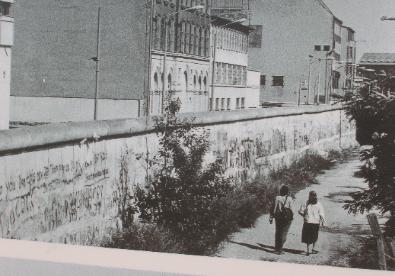
The hundred-mile-long Berlin Wall was built to
stop East Germans from going west and then
on to freedom and new lives in other countries.
After it was knocked down in 1989, most of it
literally disappeared into the pockets of the
German people, East and West Berliners who
wanted to keep a piece of the wall for
themselves or to sell. With the exception of a
few small sections now being preserved as
museum pieces where they originally stood,
most of the wall is gone, and the area is now is
being developed into commercial sections,
roads, parks, memorials, and residential
houses and apartments.
The hundred-mile-long Berlin Wall was built to
stop East Germans from going west and then
on to freedom and new lives in other countries.
After it was knocked down in 1989, most of it
literally disappeared into the pockets of the
German people, East and West Berliners who
wanted to keep a piece of the wall for
themselves or to sell. With the exception of a
few small sections now being preserved as
museum pieces where they originally stood,
most of the wall is gone, and the area is now is
being developed into commercial sections,
roads, parks, memorials, and residential
houses and apartments.
Because most traces of the Berlin Wall disappeared at an alarming rate, a law was passed mandating that
wherever the wall once stood, the ground will be marked minimally by a double row of Belgium blocks laid in the
asphalt of a street or concrete sidewalk, through parking lots and grassland and parks. If a building is constructed
over ground where the wall once stood, then the owner of the building must mark the wall’s route by changing the
color of the flooring. If, for example, a restaurant floor is dark oak, then a wood noticeably lighter in color has to be
inlayed in the flooring to mark the continuation of the Belgium-block path that terminates outside the building. The
trail of blocks laid on the opposite side of the property will then pick up the path on the other side of the building. If
carpeting, ceramic tile, or vinyl flooring is used, then its color must also change along the path.
wherever the wall once stood, the ground will be marked minimally by a double row of Belgium blocks laid in the
asphalt of a street or concrete sidewalk, through parking lots and grassland and parks. If a building is constructed
over ground where the wall once stood, then the owner of the building must mark the wall’s route by changing the
color of the flooring. If, for example, a restaurant floor is dark oak, then a wood noticeably lighter in color has to be
inlayed in the flooring to mark the continuation of the Belgium-block path that terminates outside the building. The
trail of blocks laid on the opposite side of the property will then pick up the path on the other side of the building. If
carpeting, ceramic tile, or vinyl flooring is used, then its color must also change along the path.